

Stop Asking “Why Did They Stay?” — Ask What We Could Have Done
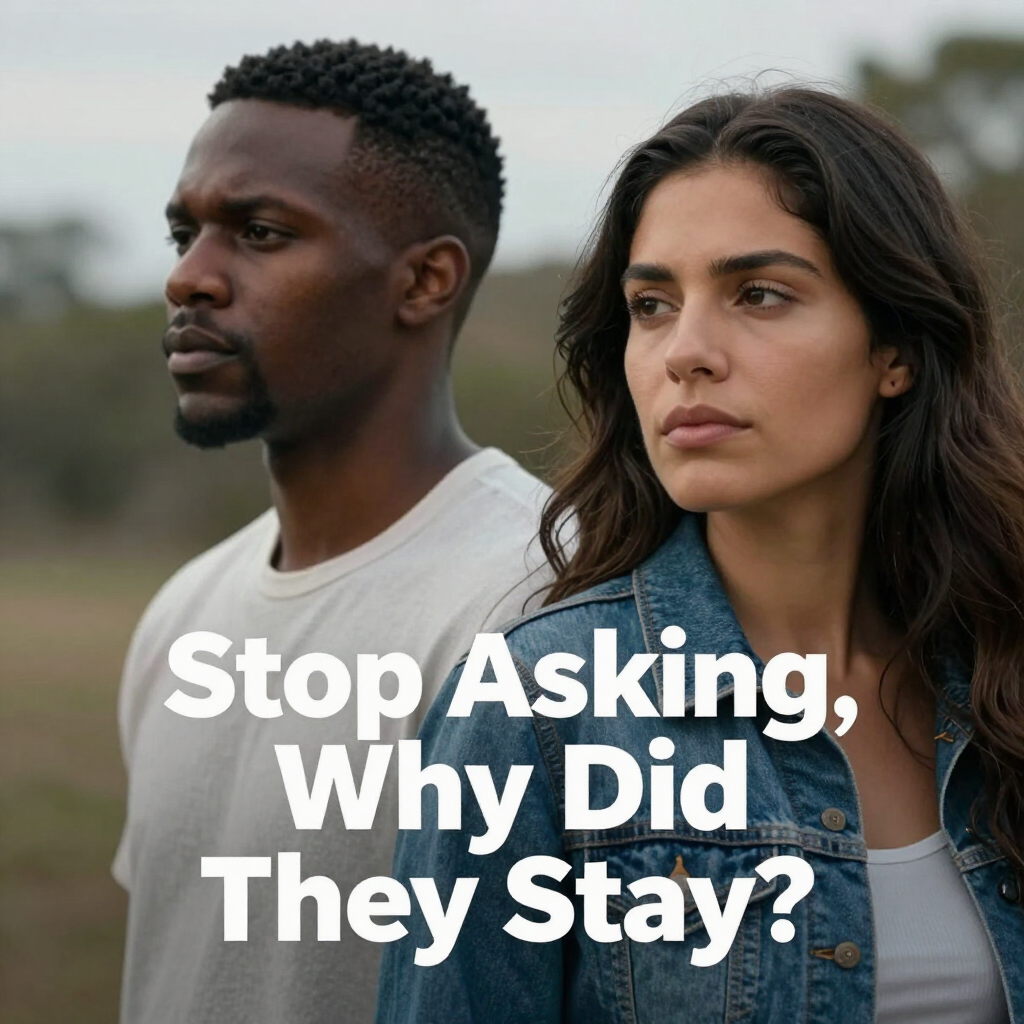
In memory of a disabled gentleman whose life was tragically taken by his significant other.
“Why did he stay?”
It’s one of the first questions people ask when someone becomes a victim of domestic violence.
And I get it. We want an explanation. We want something that makes the tragedy make sense.
But maybe we're asking the wrong question.
Because from the outside, leaving can look easy.
“I would've left.”
“I would've called the police.”
“I would've gotten a restraining order.”
“There is no way I would've stayed.”
We say these things with our whole chest.
Ten toes down.
But here's the reality check:
You don't actually know what you would do until you're living it.
You don't know what fear feels like when you're experiencing it every day.
You don't know what it feels like to love the person you're afraid of.
You don't know what it feels like to depend on someone emotionally, physically, financially, or even for basic daily needs.
You don't know what it's like when leaving means losing your home, your stability, your caregiver, your transportation, your finances, your support system—or possibly putting yourself in even greater danger.
And when disability is part of the equation, those barriers can become even more complicated.
Maybe He Didn't Stay Because He Was Weak
Maybe he stayed because he loved them.
Maybe loyalty kept him there.
Maybe he believed things would change.
Maybe he was afraid.
Maybe he felt responsible for the other person's wellbeing.
Maybe he was financially dependent.
Maybe he was physically dependent.
Maybe he was emotionally exhausted.
Maybe he felt trapped.
Maybe he didn't recognize certain behaviors as domestic violence.
Maybe he had tried to leave before.
Maybe he thought he could handle it.
Maybe he simply didn't have the resources or support he needed.
Or maybe it was a combination of things that none of us could ever fully understand.
We weren't in his shoes.
And that's important to remember before we judge someone else's survival choices.
Even a Restraining Order Didn't Stop the Tragedy
In this fictional case, a restraining order was obtained.
But it didn't prevent what ultimately happened.
And that's a conversation we desperately need to have.
A restraining order can be an important legal tool, but it isn't a force field.
A piece of paper doesn't automatically make someone safe.
That's why people experiencing domestic violence need more than one tool.
They need safety planning.
They need accessible resources.
They need people they can trust.
They need financial and housing support.
They need transportation options.
They need mental and emotional support.
And disabled survivors need resources designed with their actual realities in mind.
Because telling someone to “just leave” without helping them figure out how to leave safely isn't necessarily helping.
Sometimes it's just another way of saying, “Figure it out yourself.”
The Irony Is What Hurts
This fictional gentleman worked within the disability community.
He was around people who understood disability.
He may have educated and supported others.
He may have been the person someone else went to for help.
Yet even someone working within a community can lack the resources they personally need.
And that's a lesson we shouldn't ignore.
Being educated doesn't mean you're immune.
Being an advocate doesn't mean you're invincible.
Helping others doesn't mean you never need help yourself.
Sometimes the people pouring into everyone else don't have anyone pouring back into them.
Let's Change the Question
Instead of asking:
“Why did he stay?”
Let's ask:
“What kept him from being safe?”
What resources were missing?
Who could he have called?
Did he have a safety plan?
Did the people around him recognize the warning signs?
Were domestic violence services accessible to him?
Did he know what abuse could look like beyond physical violence?
Did he have somewhere safe to go?
Did he have financial independence?
Did he have people who would believe him?
Did he feel safe telling someone?
Those are the questions that can actually help us prevent the next tragedy.
Domestic Violence Education Belongs in Every Household
We talk about finances.
We talk about relationships.
We talk about sex.
We talk about mental health.
We talk about parenting.
We talk about careers.
But how often do we sit down and talk about domestic violence?
How often do we teach people what the red flags actually look like?
Controlling who someone talks to.
Isolation.
Threats.
Manipulation.
Financial control.
Constant monitoring.
Intimidation.
Humiliation.
Using someone's disability against them.
Threatening to take away medication, transportation, housing, benefits, or needed assistance.
These things deserve to be talked about.
Because sometimes the first step toward safety is simply having someone say:
“That's not normal. That's abuse.”
We Need to Do Better
This isn't about blaming victims.
It's about building better systems.
It's about creating communities where people are educated before they're in crisis.
It's about making sure disabled people are included in domestic violence conversations—not treated like an afterthought.
It's about making resources accessible.
It's about teaching families and friends how to recognize the red flags.
It's about creating support systems that don't disappear when things get complicated.
And it's about understanding that survival doesn't always look the way we expect it to.
We may never know exactly why this fictional gentleman stayed.
And maybe that's okay.
Because his story doesn't have to give us every answer for us to learn something from it.
His story can challenge us.
His story can make us uncomfortable.
His story can make us ask better questions.
And hopefully, his story can make us do something.
Don't Wait Until Someone Becomes a Headline
Talk about domestic violence before there is a crisis.
Talk about healthy relationships.
Talk about boundaries.
Talk about control.
Talk about manipulation.
Talk about safety planning.
Talk about resources.
Talk about disability and domestic violence.
Talk about how to help someone without judging them.
Because sometimes the person who needs help isn't going to look like the person you imagined.
It could be your friend.
Your sibling.
Your parent.
Your neighbor.
Your coworker.
Someone in your church.
Someone in your disability community.
Or even someone sitting next to you who has become very good at saying:
“I'm fine.”
So the next time you hear about someone who stayed in an abusive relationship, before you ask,
“Why didn't they leave?”
Pause.
Ask yourself:
“What would I have needed if that were me?”
Then ask the bigger question:
“What can I do now to make sure someone else has access to what they need?”
Because we can debate someone's choices forever.
Or we can build a community where people have more choices in the first place.
Educate.
Empower.
Listen.
Believe.
Support.
Make resources accessible.
And most importantly—
Don't wait until it's too late.
Share
Social Media Updates